Banks Get Out, Pepper Gets Busy
Owning a mortgage book used to be the point of being a bank. This week, two of them decided it wasn’t worth the time or the paperwork.
HSBC has agreed to offload its entire $36 billion Australian home and personal loan portfolio to Blackstone and will spend the next 18 months winding down what’s left of its retail banking arm. Non-bank lender Pepper Money will manage the loans once the ink is dry.
Pepper has also partnered with asset manager KKR and funds manager PIMCO to buy and manage Westpac’s RAMS mortgage book. Westpac took a haircut on its original price of $21.4 billion finally settling for $15.4 billion. It is interesting that Pepper Money appears to have become the servicer of choice for whatever the banking industry doesn’t want to run anymore.
Perks Are Packed
Remember when premium credit cards felt…premium?
Not so, now.
NAB and Westpac have become the latest banks to quietly downgrade credit card rewards ahead of the Reserve Bank’s ban on card surcharges. Points value will be slashed along with insurance cover. Interest rates and annual fees will rise.
None of this should surprise anyone. If governments remove one revenue stream, banks simply look for another. Somewhere inside every regulatory reform is a spreadsheet entitled “customers”.
There is a lesson. If you’ve had the same rewards card for years, read the next letter they send to you instead of filing it in the bin. The gravy train appears to have reached the end of the tracks.
Complaint Olympics
For the third year in a row, Australians have set a record for something; and it isn’t saving.
The financial complaints authority logged more than 100,000 complaints in 2025-26, up sharply across every sector it covers.
Banking and finance led the way with almost 67,000 complaints, up 23%, while general insurance complaints hit just over 36,000 and investment and advice complaints jumped 56% to 6,542,
The positive news is that since 2018, AFCA has clawed back $2.6 billion for consumers.
Small Business, Big Squeeze
Small business owners aren’t complaining to AFCA. They’re just quietly going broke a bit more slowly than before.
A new AMP Bank Go index shows small business costs have climbed 24.6% since March 2020, on track for a 27.1% rise by year’s end.
Insurance costs are up a whopping 51.7%, The cost of interest payments and wages has similarly exploded.
The Great Hesitation
Star finance broker Mark Bouris, has seen more property cycles than most Australians have owned barbecues. When he says buyers have “stopped buying houses”, people should probably listen.
His observation isn’t that the market has crashed. It’s that it has frozen.
First-home buyers have almost disappeared from his company’s loan book. Investors have retreated dramatically. Around 80 per cent of new business is refinancing existing debt rather than buying property.
It’s an awkward stalemate. Buyers have lost borrowing power after three rate rises and the Federal Budget’s tax changes. Sellers, meanwhile, are still pricing homes like it’s February.
In Case You Missed It……..
Deposit Nod
Liberty became the first non-bank lender approved to participate in the Government’s 5% Deposit Scheme, potentially widening access for borrowers who don’t fit traditional bank boxes.
Savings Reality
Commonwealth Bank chopped up to 1.05 percentage points from six-month term deposits. Loyalty remains one of the lowest-yielding investments available.
Borrowers Still Borrow
Mortgage Choice settled a record $27 billion in loans for the year to June 30, 2026. EOFY 27 may see a less cheerful result if current doom and gloom continue.
A Final Wrap
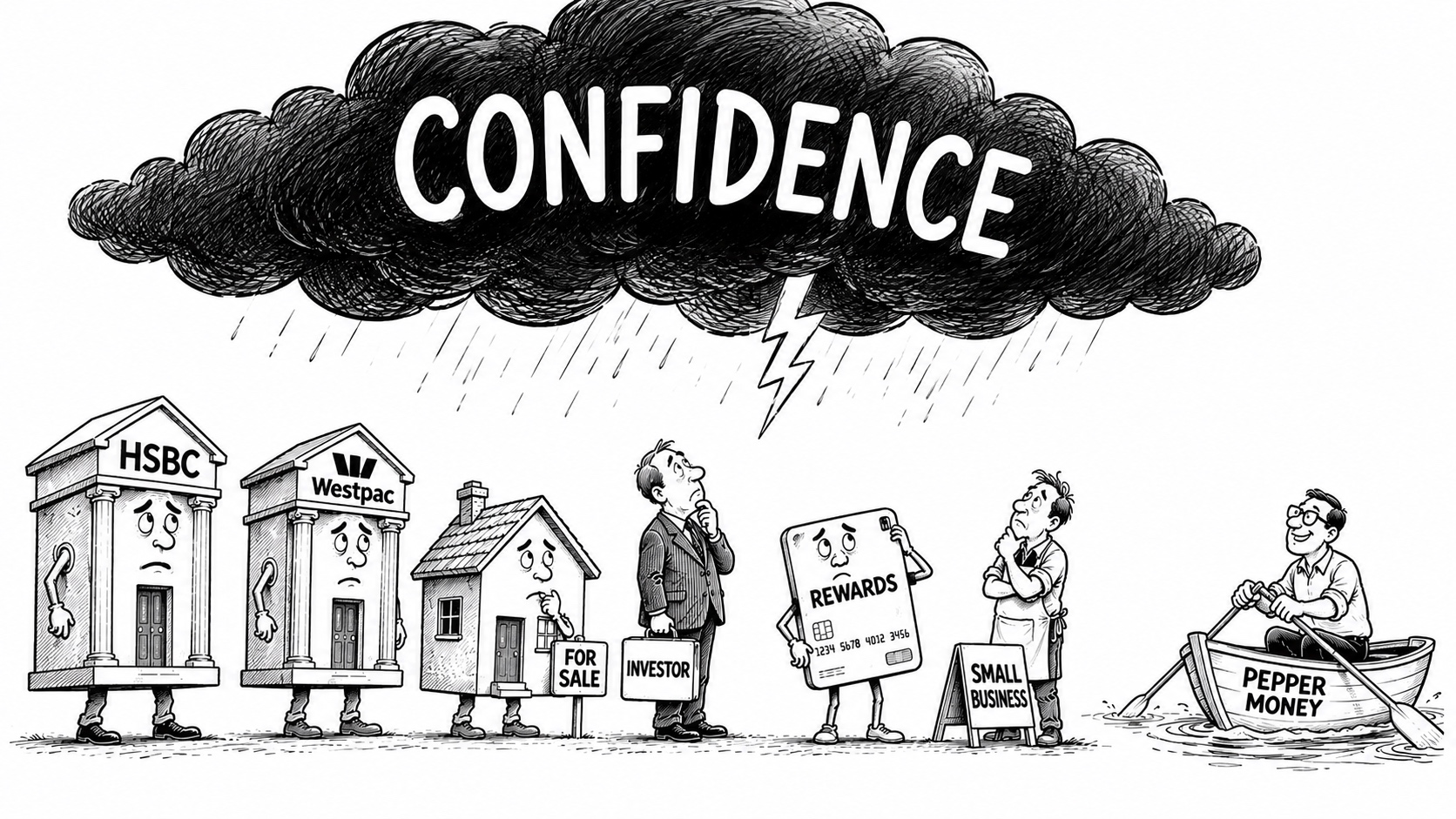
The week on Money Road was about confidence…..or lack of it
Banks are trimming businesses. Rewards are shrinking. Property buyers are sitting on their hands and instead of taking risks, small business is holding its breath and absorbing costs.
Confidence is a curious thing. It doesn’t evaporate all at once. It ebbs away, one decision at a time. A bank, a borrower and a business owner all become a little more cautious. Individually, they’re just decisions. Together they form a trend that’s worth paying attention to.