Rate rises? Banks are saying yes!
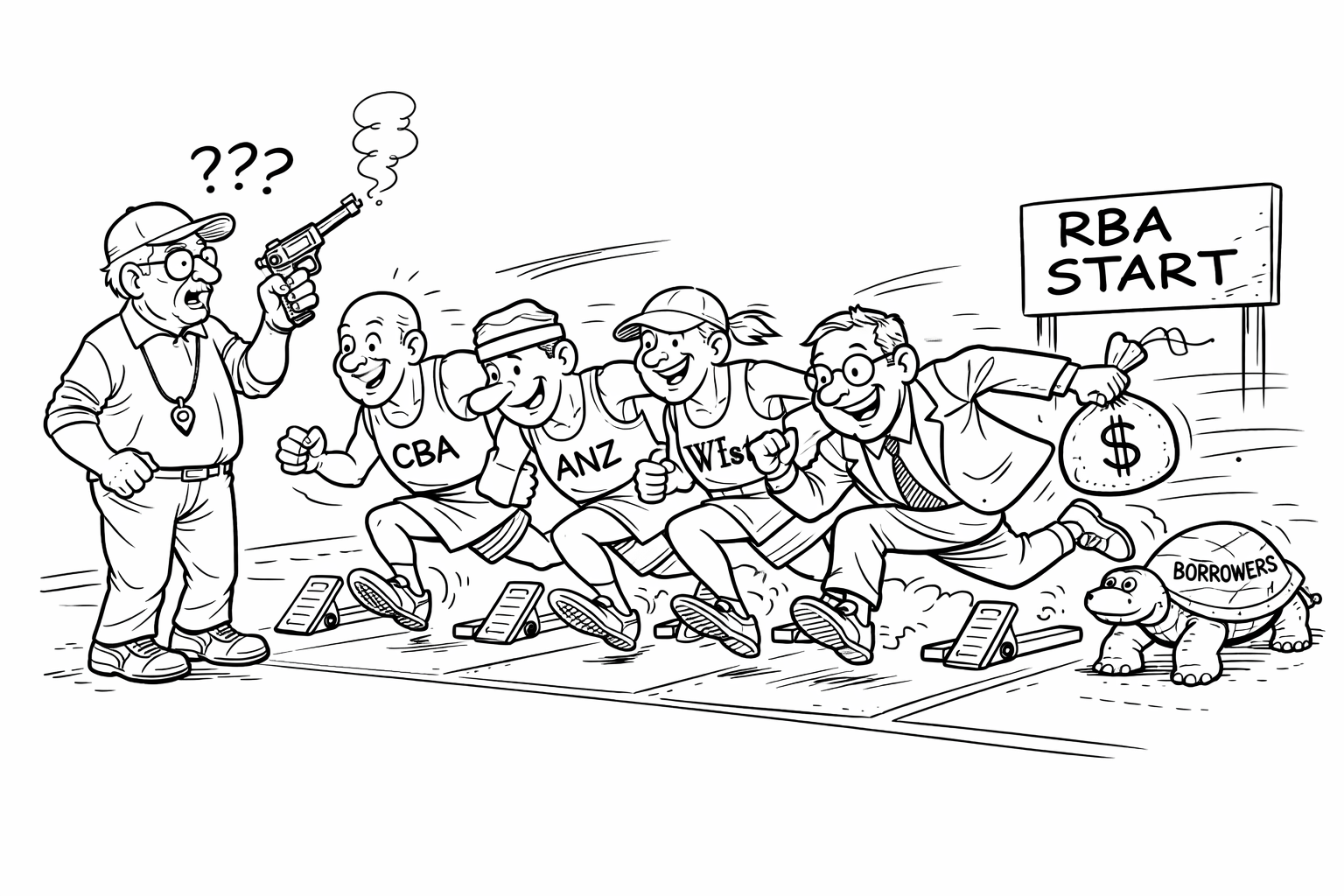
Just when you thought the Reserve Bank might briefly sit on its hands, a herd of lenders stampeded ahead. A staggering 53 Australian lenders — yes, more than a dozen more than you could count on two hands — have already lifted fixed home loan rates since the December RBA meeting, with some hikes as brutal as 70 basis points. That’s right: borrowers are now paying hundreds more each month because lenders decided to get a jump on what they think the RBA might do.
Even variable rates — usually the canary in the cash-rate coal mine — have creaked up, with Heritage Bank and People’s Choice pushing them higher just weeks out from the next RBA boardroom meeting. In real terms, this isn’t subtle; it’s a pre-emptive strike by lenders who have collectively lost faith in the RBA’s “let’s wait and see” posture.
Mortgage demand is surging – cue the Fomo
Comedy gold: while repayments balloon, mortgage demand has hit a three-year high. Aussies are queuing up for home loans in droves — particularly in WA, Queensland and NSW — driven by last year’s rate cuts, expanded first home buyer deposit schemes and stubbornly high rents. That is, borrowers are borrowing harder because the pain of not buying now feels worse than the pain of getting hammered by repayments later.
Refinancing enquiries alone made up more than a third of total mortgage demand. Translation: people aren’t just buying — they’re scrambling to lock in something, anything, before another rate shark appears. This is less optimism and more war-time ration queue psychology.
Term deposit rates are rising too – savers breath
In a rare moment of clarity, the deposit-side of the ledger is also seeing moves. both NAB and Macquarie have lifted term deposit rates, with new offerings pushing into the 4.7% p.a. territory for certain terms. That’s not a windfall but it’s enough to make savers raise an eyebrow.
The move comes as economists and markets price in the real possibility of higher cash rates in 2026. If that happens, savers might finally get a crumb from the banquet table that’s long been reserved for borrowers and speculators.
Non- bank lenders turn the screws on SME’s
While lenders tighten screws on mortgages, another part of the finance world is turning the screws on small businesses. Non-bank lenders are now responsible for a record share of court-enforced insolvency actions as traditional banks pull back from SME lending. The Alares Credit Risk Insights report shows this shift has been building since 2019 and only gained momentum into 2025.
This isn’t a harmless rebalancing; it’s a signal that as banks seek safer, bigger mortgage books, non-banks — who don’t have the same regulatory safeguards — are aggressively recovering from defaulting businesses that can least afford it. If you run an SME, that’s not competition — that’s a cudgel.
Public Bank? Councils Say Yes, Politicians Say… Maybe?
Public bank? Council says yes please.
In a twist that reads like satire, the Wagga Wagga City Council has called on the federal government to investigate creating a government-owned bank. Yes, regional councils proposing a state bank — it’s 2026, and the old ideas are back because the new ones clearly aren’t working.
Whether Canberra bites remains to be seen, but this is a naked admission that many Australians distrust the private banking oligopoly — and given what they’ve seen lately, who can blame them?
Citi bonuses jump
Somehow, amid all this pressure on borrowers and SMEs, Citi’s bankers are throwing a party — bonuses are up 20% despite talk of cost-cutting. Yes, employees get richer while borrowers get poorer — welcome to modern finance.
It’s a reminder that the financial industry has many layers: foundational pain for everyday Australians at the bottom, and fat bonus cheques at the top. If inequality had a glittering ballroom, this is the dance floor.
Summary
The finance world right now is like a party where only the guests with power get fed. Mortgages are getting more expensive just as demand hits peaks, savers get marginally better rates, SMEs get chased into court by non-banks, councils are pitching state banking, and Wall Street dealmakers are getting fat bonuses. If misery had a brand, this quarter would be exclusive.