Fraud department
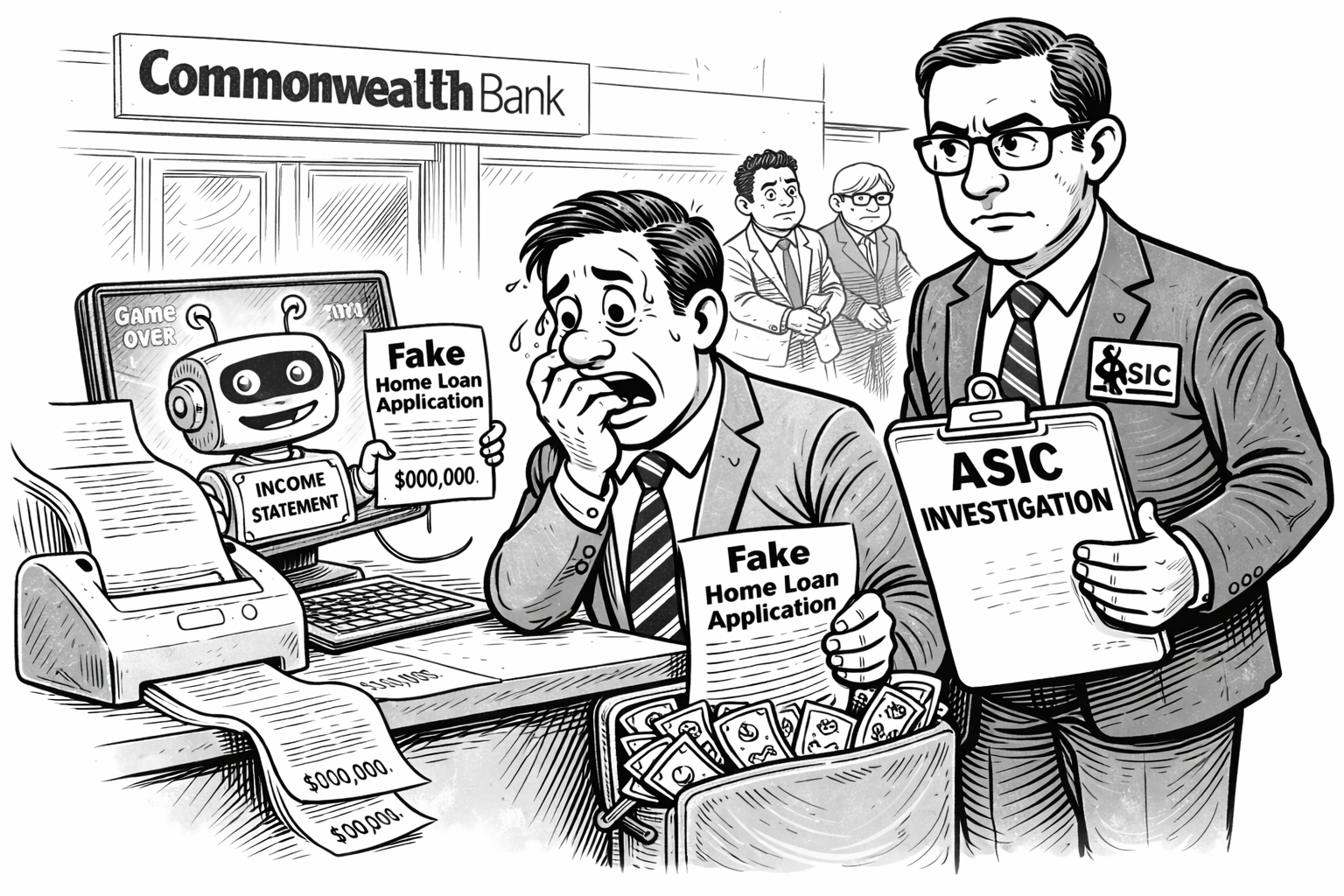
Australia’s biggest bank has discovered a rather awkward problem: someone appears to have borrowed about $1 billion using fake home-loan applications. And now the corporate watchdog has arrived with a clipboard.
The Australian Securities and Investments Commission (ASIC) has confirmed it is making compliance inquiries into Commonwealth Bank after the bank uncovered large-scale suspected mortgage fraud involving fake income documents — some reportedly generated using AI. The bank has already referred two brokers and several accountants to authorities as investigations continue.
Which raises a philosophical question about modern banking: when your fraud detection systems can be fooled by ChatGPT-with-a-printer, perhaps the underwriting process isn’t quite the technological marvel the brochures suggest.
Bond market tantrum
Meanwhile, in the bond market — the place where economists quietly panic — prices are falling fast and yields are jumping.
Australia’s 10-year government bond yield has brushed 5%, the highest level in about 15 years, after rising roughly 80 basis points since October. The five-year yield has surged above 4.6%, and the three-year yield — often seen as a guide to where the RBA is heading — has climbed above 4.5%.
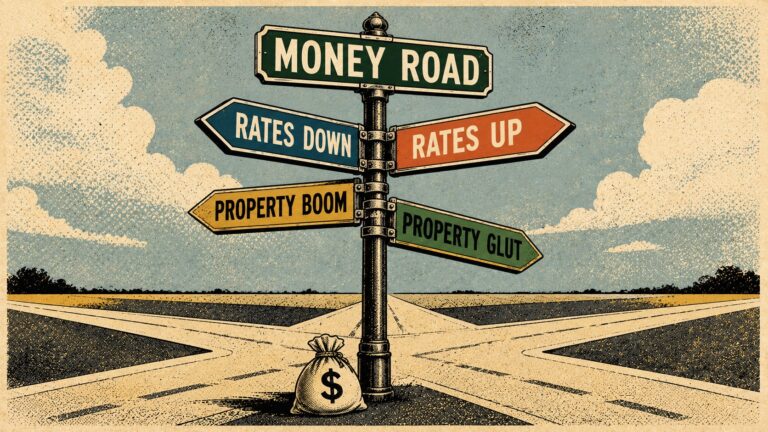
Bond prices fall when markets think interest rates will rise. Right now, traders appear to believe the RBA isn’t finished tightening. For mortgage holders, this matters because fixed mortgage rates are heavily influenced by bond yields. Translation: the bond market is whispering the words no borrower wants to hear — “higher for longer”.
Heading up again
Just in case the bond market wasn’t clear enough, the banks are now spelling it out.
Westpac and NAB economists are predicting three consecutive RBA rate hikes. If that forecast holds, borrowers may need to prepare for another round of mortgage repayment increases in the months ahead.
Banks forecasting higher rates isn’t unusual. Banks forecasting them repeatedly while customers are already stretched? Slightly more interesting. Especially when the same institutions will later send emails explaining why your variable rate has gone up but your savings rate hasn’t.
Mortgage mirage
Oddly enough, despite all the doom forecasting, mortgage stress risk is currently at a three-year low, according to industry analysis.
But before anyone starts celebrating with a fixed-rate refinance, analysts warn the situation could change quickly if further rate hikes arrive. Mortgage stress tends to behave like a delayed reaction — a bit like sunburn or a tax bill. You don’t notice it immediately, but eventually it gets uncomfortable.
In other words, the calm may be temporary.
Housing’s giant baloon
Meanwhile, Australia’s property market continues its favourite hobby: getting bigger.
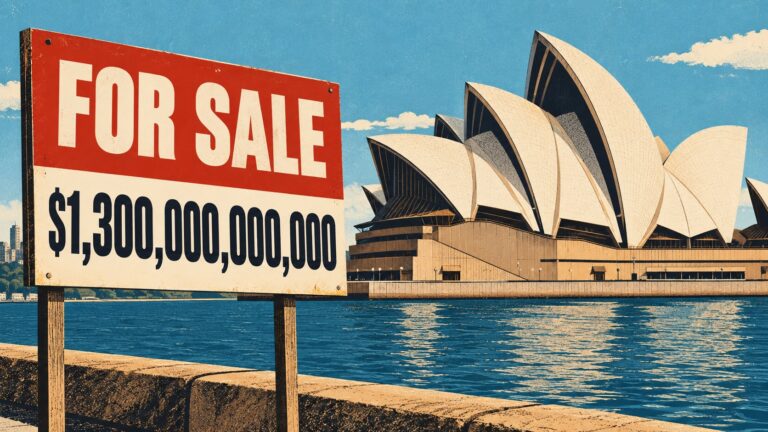
The total value of Australian residential real estate has now hit roughly $12.3 trillion, a number so large it’s normally reserved for describing global tech companies or minor European economies.
This milestone reflects the extraordinary scale of Australian housing wealth — and the equally extraordinary level of leverage underpinning it. If housing were a national sport, Australia would already have a dynasty.
Shrinking scheme
For first-home buyers, though, there’s a small development that sounds helpful: ANZ has become the final major bank to join the federal government’s 5% deposit home-loan scheme.
The scheme allows eligible buyers to purchase homes with as little as a 5% deposit, with the government guaranteeing part of the loan.
Of course, buying a house with a smaller deposit in a country with some of the world’s most expensive housing markets is a bit like entering a marathon on roller skates. Technically possible. Not necessarily comfortable.
Private credit steps forward
Outside the big banks, the lending ecosystem continues evolving.
A new private credit fund is targeting a $25 billion funding gap in Australia’s lending market, offering another source of capital for borrowers who struggle to obtain finance through traditional banks.
Private credit has grown rapidly in recent years as tighter regulation has pushed some lending outside the banking system. When regulators squeeze one end of the balloon, the credit usually pops up somewhere else.
Insurance squeeze
Finally, small businesses are discovering another unpleasant financial reality: insurance is getting expensive.
The Insurance Council of Australia warns that rising legal costs and regulatory complexity are pushing insurance premiums higher for small businesses, potentially putting coverage out of reach for some operators.
Which is the sort of development that only becomes obvious after the first uninsured disaster.
The big picture
So here we are:
Banks investigating billion-dollar fraud, bond markets predicting higher rates, economists forecasting more RBA hikes, housing worth $12 trillion, and small businesses struggling to afford insurance.
In short, the Australian financial system is functioning exactly as designed — expensive, complicated, and occasionally surprised when someone reads the rulebook closely enough to exploit it.