
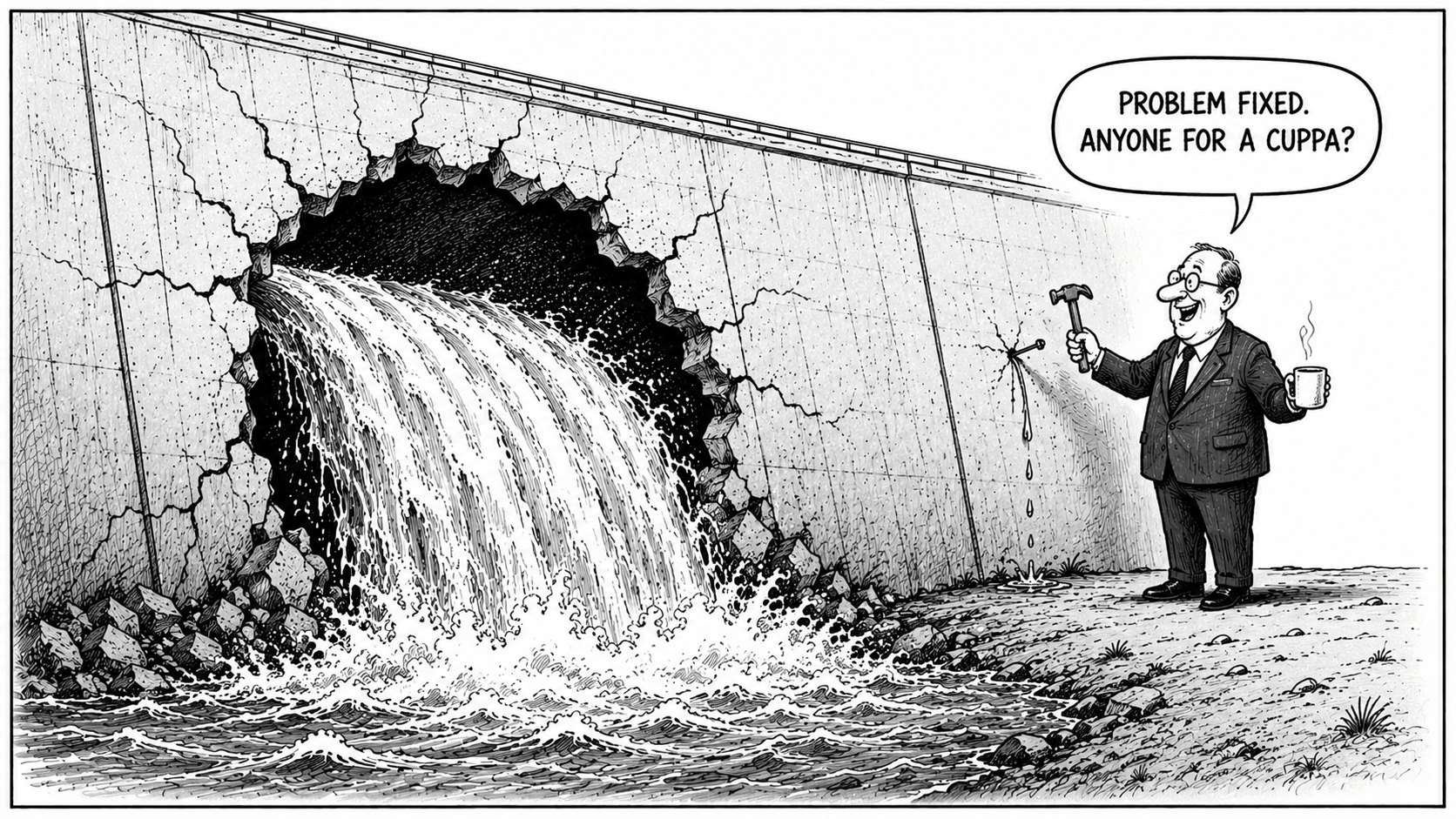
Small Target, Big Win
The federal government has unveiled a bold new way to improve housing affordability: ban an activity that represents less than one per cent of residential lending.
The government intends that self-managed super funds will no longer be able to borrow to purchase residential property. Existing arrangements will be grandfathered. The estimated savings will add $50 million to the budget.
When a government proudly tackles less than one per cent of the market, you wonder who is attending to the other 99 per cent.
The Wrong Inflation
Headline inflation eased to 4.0 per cent in May, comfortably below expectations, thanks largely to cheaper petrol and the temporary fuel excise cut. The headline number looked encouraging enough to spark fresh hopes of interest rate relief. However, the number the Reserve Bank actually watches told a different story.
Underlying inflation rose to 3.6 per cent as housing, electricity, rents, insurance and other domestic costs refused to cooperate. Cheaper petrol improves headlines. It doesn’t fix home-grown inflation. Borrowers probably shouldn’t start planning a celebration.
Three Loans, Forty Percent
Judo Bank reminded investors that banking occasionally involves risk.
Shares in the specialist SME lender fell almost 40 per cent after three business loans deteriorated, forcing the bank to increase expected bad debt costs and lower its profit guidance.
Three customers may not sound like much. Shareholders clearly disagreed.
Compassion Arrives
Banks frequently promise to protect customers from fraud. The difficult part seems ensuring they keep those promises.
A Sydney couple whose St George Bank accounts were hacked and drained of $100,000 were refused reimbursement by the bank which made them wait a month for an answer. St George finally relented only after threats of an investigation by the Australian Financial Complaints Authority, inquiries from pesky journalists and news of HSBC’s slap down by the Federal Court. The couple were reimbursed in full.
It’s remarkable how often compassion arrives once regulators and journalists start poking around. Congratulations to Sky News who ran the story.
Luxury Diversification
If investors hand over money to build disability housing, they generally assume that’s where the money is headed. However, that’s not always the case.
ASIC has charged Queensland property developer David McWilliams with 13 criminal offences, alleging more than $10 million raised for disability projects was diverted into, among other things, cryptocurrency, an Aston Martin, a pub, overseas investments and luxury property. Somewhere in the investment documents there was almost certainly a section titled “risk factors”. It probably didn’t mention an Aston Martin.
The allegations remain before the courts and have not been proven.
Driven To Debt
Meanwhile, ASIC is diving into the murky waters of the car loan trade and from its inquiries thus far it appears that buying the car can be the cheapest part of owning it.
The regulator’s review of more than 350,000 car loans found fees varied dramatically depending on the lender and distributor, with one borrower paying more than $9,000 in fees on a $49,000 loan. The regulator also found many consumers, whose vehicles were repossessed, still owed most of the original debt, raising concerns about affordability assessments and oversight of brokers and dealers.
There is something uniquely depressing about losing the car while keeping most of the loan. Expect more to come.
Collateral Damage
Banks devote considerable time to talking about responsible lending. Sometimes responsibility apparently comes with additional poker machines.
Documents released by the Victorian Gambling and Casino Control Commission reveal ANZ Bank told the owners of Melbourne’s Dorset Gardens Hotel it would lend up to $6 million for redevelopment, subject to several conditions including approval for an extra eight poker machines. Approval was given despite objections from Maroondah Council and anti-gambling advocates. The venue’s patrons lost more than $20 million on poker machines last financial year, with the additional machines expected to generate another $1.1 million to $1.7 million in annual losses.
It’s clear that from ANZ’s point of view some revenue forecasts are considered more dependable than others.
The Final Word
This week was a useful reminder that confidence and reality don’t always reconcile come the end of the month and while the press releases may sound reassuring, reality insists you read the fine print.